
Last reviewed: September 2026
5 Historical Facts About Berlin
Berlin can feel both ancient and very new. Its documented city history reaches back to the Middle Ages, but the Berlin we know today was shaped by a series of dramatic turning points: Prussia, rapid industrial growth, the Weimar Republic, Nazi dictatorship, war, division and reunification.
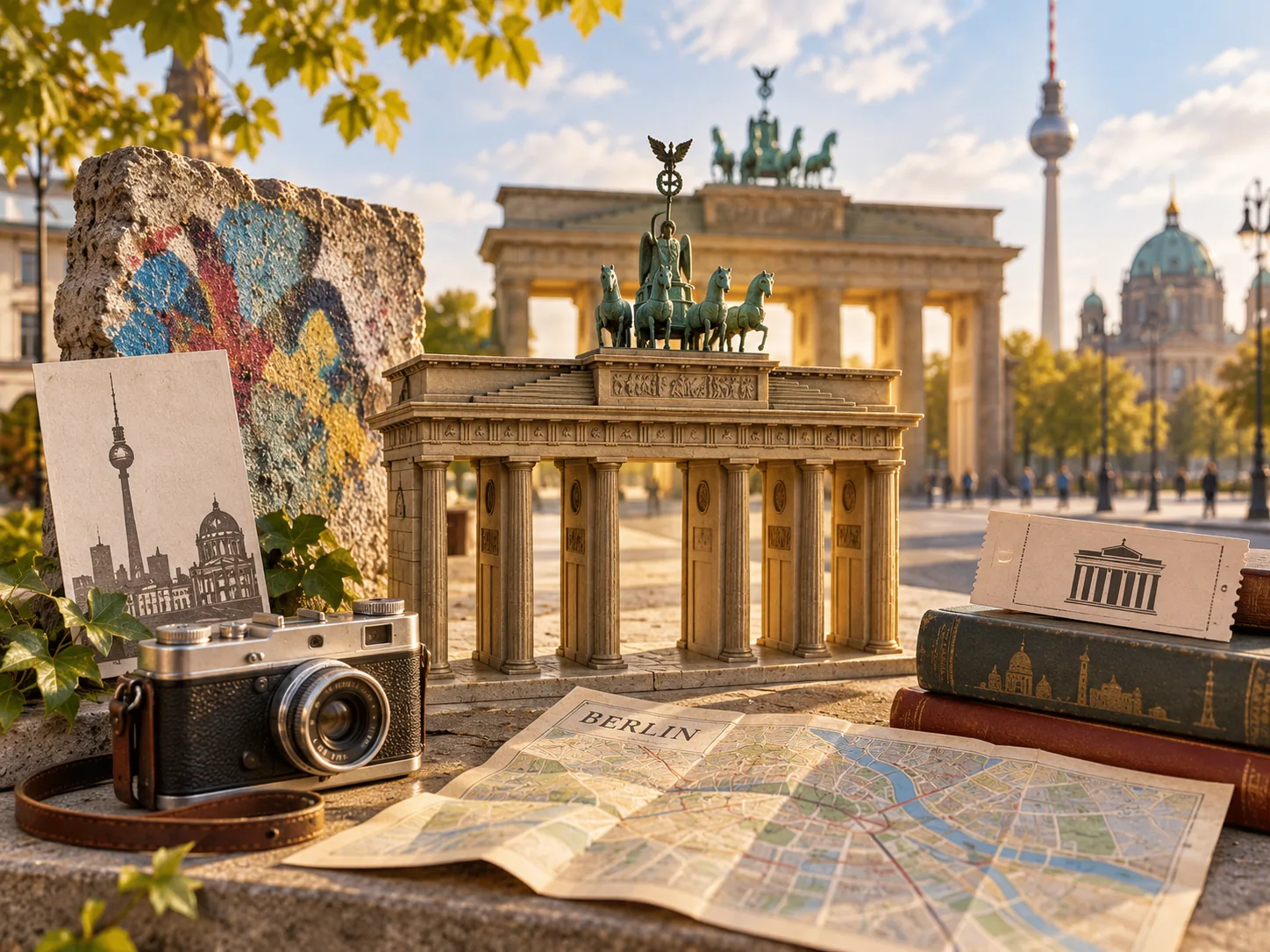
These five facts give you a useful framework for understanding the city beyond the usual landmarks.
1. Berlin grew from two medieval settlements
Berlin’s official founding year is 1237. That is when Cölln, the settlement on the Spree island, first appears in surviving written records. Berlin, on the opposite bank, is documented in 1244. The two trading settlements developed side by side and later grew together.
Archaeological finds show that people were living in the area even earlier, but 1237 remains the traditional date used for the city’s foundation.
The historic core around the Spree island, Petriplatz and the Nikolaiviertel still sits right in the middle of modern Berlin.
2. Prussia turned Berlin into a political capital
From the 15th century, Berlin became a residence of the Hohenzollern rulers. It later developed into the political centre of Brandenburg-Prussia and eventually the capital of Prussia.
During the 18th century, particularly under Frederick II, Berlin grew in political, intellectual and cultural importance. Unter den Linden, the Zeughaus, the State Opera and later the Brandenburg Gate still reflect this period of ambitious state-building.
When the German Empire was founded in 1871, Berlin became the capital of the new nation. Industrialisation and rapid population growth then transformed the city again.
3. ‘Greater Berlin’ was only created in 1920
Many places that now feel inseparable from Berlin were once independent towns and municipalities. On 1 October 1920, the Greater Berlin Act combined eight towns, 59 rural municipalities and 27 estate districts into a single city. Berlin’s population jumped to about 3.8 million.
The reform created much of the metropolitan framework that still shapes Berlin today.
The decade that followed became famous for the city’s ‘Golden Twenties’: theatre, film, architecture, literature and nightlife gave Berlin an international reputation. But the period was not golden for everyone. Inflation, unemployment, political violence and poverty were part of Weimar-era Berlin too.
4. Berlin became the centre of Nazi dictatorship and was devastated by war
The Nazis took power in 1933. As the capital of the German Reich, Berlin was a centre of political persecution, the disenfranchisement and murder of Europe’s Jews, and the planning and administration of the Second World War and other Nazi crimes.
Berlin was also home to individuals and groups who resisted the dictatorship. Memorials across the city now document both persecution and resistance.
By the end of the war, large parts of Berlin had been destroyed. After Germany’s surrender in 1945, the city was divided into four occupation sectors. That division set the stage for the next defining chapter.
5. The Berlin Wall divided the city for 28 years
During the night of 12–13 August 1961, East German authorities began sealing the border between East and West Berlin. Over time, the barriers became a complex border system. The Wall cut through streets, transport routes, neighbourhoods and families and became one of the most visible symbols of the Cold War.
On 9 November 1989, after months of public pressure and a confused announcement of new travel rules, border crossings opened. The fall of the Wall accelerated the process that led to German reunification.
On 3 October 1990, Germany was reunified and Berlin was named the country’s capital in the Unification Treaty. In 1991, the Bundestag voted to move parliament and government to Berlin.
Berlin’s history is still visible in everyday life
You do not need to enter a museum to encounter Berlin’s past. It appears in street names, memorials, gaps in the urban landscape, restored buildings and traces of the former border. Learning the history makes familiar places look different.
For the city’s stranger and more playful side, continue with our unusual facts about Berlin.
Sources
- Berlin.de – medieval Berlin and the city's foundation
- Berlin.de – the Greater Berlin Act
- Berlin.de – district history and the Weimar Republic
- Berlin.de – building and development of the Berlin Wall
- German Bundestag – the Reichstag after reunification
More from Language & Culture
German Perfect Tense: How the Perfekt Works →The German Language: All You Need to Know →Free placement test →