
Last reviewed: September 2026
Beer in Germany: Styles, Regions and Beer Culture
There is no single beer that represents all of Germany. Different regions have very different traditions: bitter Pils, smooth Helles, fruity wheat beer, malty Dunkel, Kölsch in Cologne and Altbier in Düsseldorf.
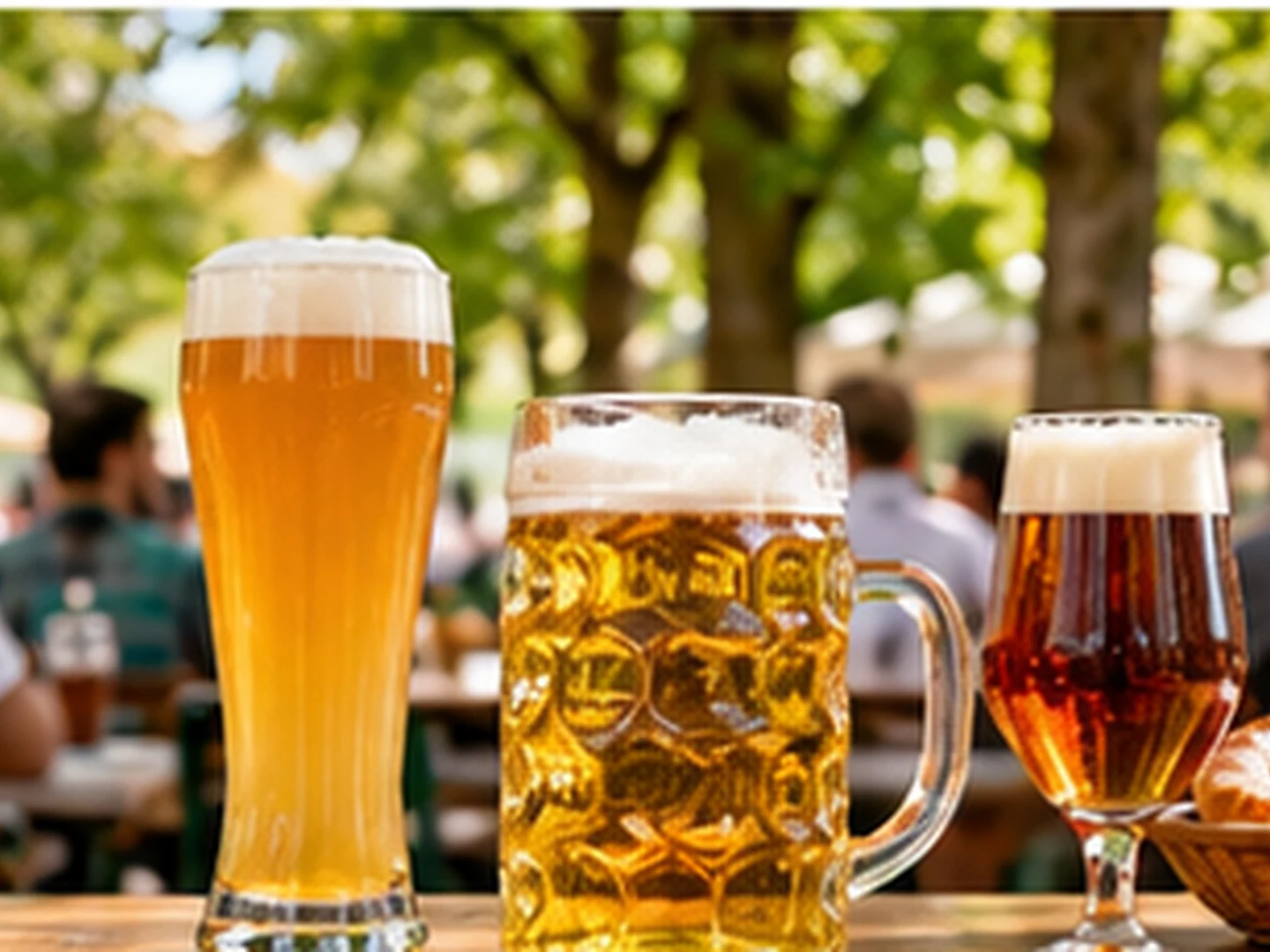
If you want to understand German beer culture, it makes more sense to look at regional styles than to search for one ‘best German beer’.
The main beer styles to know in Germany
Pils
Pils is a pale bottom-fermented beer with a noticeable hop bitterness. The style originated in Pilsen in what is now the Czech Republic, but it became enormously important in Germany.
In many parts of the country, ordering ein Pils means choosing a dry, relatively bitter beer.
Helles
Helles is strongly associated with Bavaria and Munich. It is also a pale lager, but usually tastes maltier and less bitter than a classic Pils.
In a southern German beer garden, ein Helles is one of the most typical orders you can make.
Weissbier or Weizenbier
Wheat beer is brewed with a substantial proportion of wheat malt and is particularly associated with Bavaria. It is usually highly carbonated, with fruity and spicy aromas.
You will hear both Weissbier and Weizenbier. In many contexts they refer to the same basic style.
Dunkel
Dunkel is a darker lager with a stronger malt character. Depending on the beer, you may notice caramel, bread, chocolate or light roasted flavours.
The name mainly refers to the colour. It does not automatically mean that the beer is stronger in alcohol.
Kölsch
Kölsch is a pale top-fermented beer closely associated with Cologne and the surrounding area. The name has protected geographical status.
Traditionally, Kölsch is served in a narrow cylindrical glass called a Stange. In a Cologne brewery pub, the serving ritual is part of the local culture just as much as the beer itself.
Altbier
Altbier is particularly associated with Düsseldorf and the Lower Rhine. It is top-fermented, usually copper to dark in colour, and tastes very different from Kölsch – a distinction people in the Rhineland can discuss with impressive enthusiasm.
Berliner Weisse
Berliner Weisse is a tart, top-fermented style with a long history in Berlin. Today, a number of breweries interpret the style in new ways.
For anyone interested in Berlin culture, it is a useful reminder that German beer history is not only about Bavaria, Pils and Oktoberfest.
What is the Reinheitsgebot?
Any discussion of German beer eventually reaches the Reinheitsgebot, usually translated as the German Beer Purity Law. The historical reference point is a Bavarian regulation from 1516.
Modern beer law is more complex than one famous historical rule, but the idea has had a lasting influence on how German brewing tradition is understood. Water, malt, hops and yeast remain central to classic German brewing, while detailed legal rules differ by beer type and category.
German beer culture is regional
A beer menu can work almost like a small map:
- Cologne: Kölsch
- Düsseldorf: Altbier
- Bavaria: Helles, Weissbier, Dunkel
- Berlin: Berliner Weisse
- many parts of northern and western Germany: Pils
You can now find many styles all over the country, of course. The regional associations still matter culturally.
How to order beer in German
A few phrases are enough:
Ein Pils, bitte. – A Pils, please.
Ich hätte gern ein Helles. – I’d like a Helles.
Haben Sie auch alkoholfreies Bier? – Do you have alcohol-free beer?
Welche lokalen Biere haben Sie? – Which local beers do you have?
Noch eins, bitte. – Another one, please.
If you want a particular size, ask:
Wie groß ist das Bier? – How large is the beer?
Gibt es das auch als 0,3? – Can I get that as a 0.3-litre glass?
Glass sizes and terminology vary by region and venue.
What does Prost mean?
Prost! is the classic short German toast. You will also hear Zum Wohl!.
Making eye contact while clinking glasses is common. Think of it as a social habit rather than a complicated etiquette rule.
Do you need to like beer to understand German culture?
Not at all. Beer is a visible part of regional food and drink culture, but Germany is obviously much more than beer gardens and brewery pubs. Alcohol-free beer and many other drinks are part of everyday life too.
For language learners, the interesting part is how much regional vocabulary and identity can be hidden inside an ordinary order. Asking for a Kölsch in Cologne, an Alt in Düsseldorf or a Helles in Munich teaches you a little about the place as well as the language.
And that is often how useful German grows: one real situation and one practical phrase at a time.
More from Language & Culture
German Articles: How to Learn der, die and das →Contemporary German Music: 10 Artists for German Learners →Free placement test →