
Last reviewed: September 2026
Berghain and Berlin Club Culture: More Than a Famous Door
Updated: September 2026
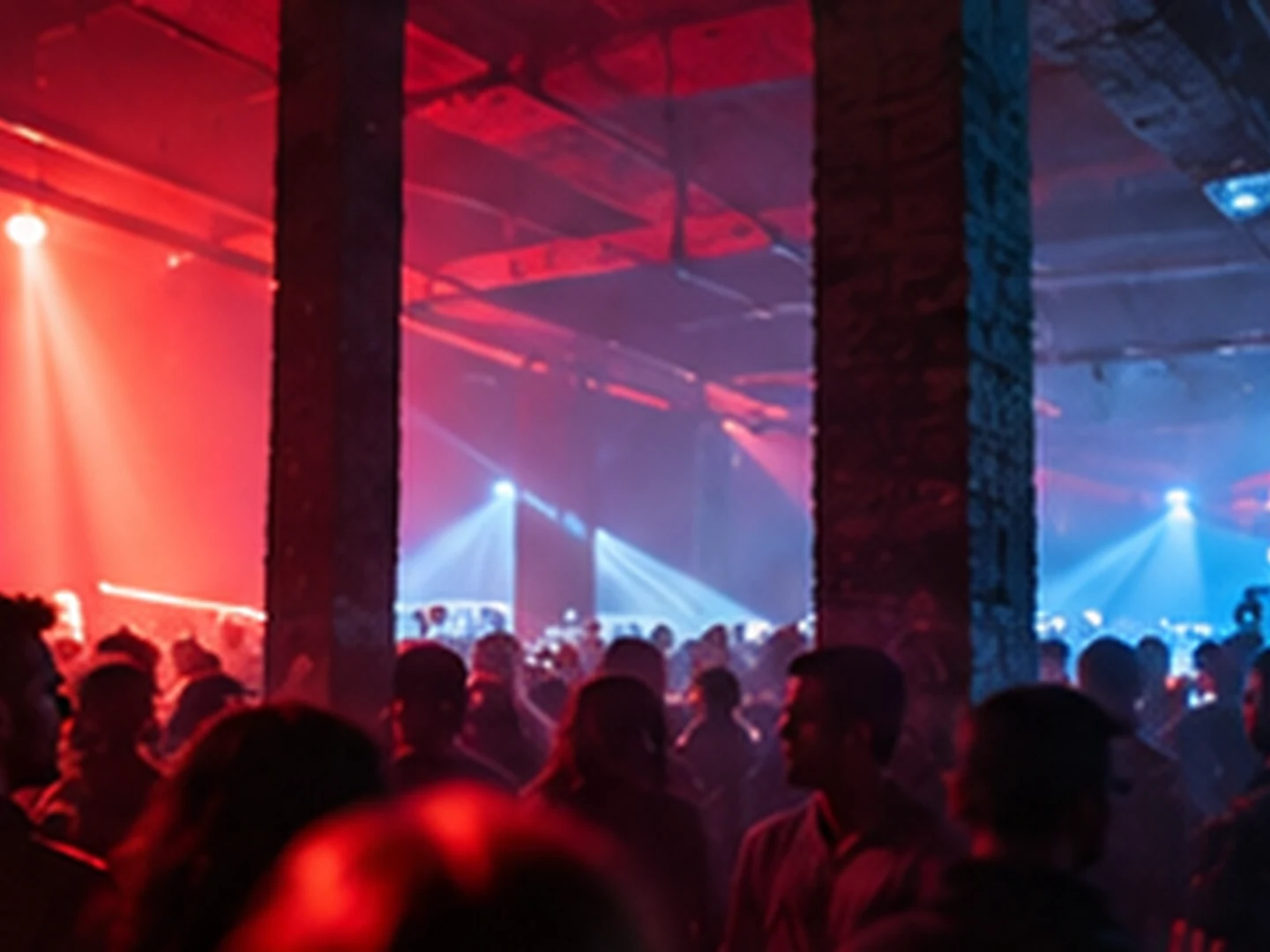
Berghain is famous around the world – for techno, its industrial architecture, marathon nights and a door policy that has generated countless myths. That is also why it makes more sense to look beyond the usual “how to get in” lists.
The short answer to the most common question is simple: there is no reliable method that guarantees entry to Berghain. Anyone presenting a fixed formula based on clothes, timing or behaviour is claiming more certainty than exists.
The more interesting question is bigger: why did Berlin become such an important city for club and techno culture in the first place?
Why club culture is so closely linked to Berlin
After the fall of the Berlin Wall in 1989, the city changed rapidly. Empty buildings, industrial sites and spaces around the former border became places for new music, parties and cultural experiments.
Techno was more than a soundtrack to that period. Clubs and temporary venues created spaces where people from East and West met, new communities formed and a city in transition could be experienced in a completely different way.
Many legendary venues from the early years no longer exist. Names such as Tresor, E-Werk, Bunker and OstGut still form part of the history of Berlin nightlife.
From OstGut to Berghain
Berghain opened at the end of 2004 as the successor to OstGut. It occupies a former heating plant near Ostbahnhof, a monumental industrial building whose vast concrete spaces have become central to the club’s identity.
The architecture is not simply a backdrop. Space, light, sound and the unusual duration of Berlin club nights interact. That relationship between music and place is one reason Berlin clubs have had such an international influence.
Berghain’s main floor is strongly associated with techno, while Panorama Bar is more closely associated with house. Over time, the venue became an international reference point for electronic music.
Berlin techno culture is recognised as intangible cultural heritage
In 2024, Technokultur in Berlin was added to Germany’s Nationwide Inventory of Intangible Cultural Heritage.
That does not mean Berghain itself became a UNESCO World Heritage Site. The recognition applies to Berlin techno culture as a living cultural practice, including music, dance events, shared knowledge, social practices and the way the culture is passed on.
That distinction matters. Club culture is not one building or one famous brand. It exists through musicians, venues, promoters, communities and the people on the dance floor.
So how do you get into Berghain?
The internet is full of supposed rules: wear black, arrive at a particular time, never speak English, memorise the line-up.
None of those is a guarantee.
Admission decisions are made at the door, and a club night is not a standardised product. The programme, crowd and atmosphere change from one event to the next.
If you plan to visit any Berlin club, a more useful approach is to:
- check the current programme,
- read the venue’s official information,
- respect the space and the people around you,
- accept that entry is never guaranteed.
That is more realistic than trying to solve the door like a puzzle.
Club culture is also about freedom, privacy and respect
Part of Berlin’s club culture grew from a desire for spaces with fewer conventional social expectations. For many people, clubs are places to dance, express themselves and find community.
Those freedoms also depend on boundaries. Respect, consent, privacy and the rules of the individual venue matter. A good night is not only about where you manage to enter; it is also about how people share the space once they are inside.
This is why Berlin club culture is better understood through its history and values than through tricks for passing one particular door.
Five useful German words for a Berlin club night
- die Schlange – queue
- der Einlass – admission / entry
- die Garderobe – cloakroom
- die Tanzfläche – dance floor
- auflegen – to DJ / play a set
A useful question is:
Wer legt heute auf?
Who is playing tonight?
And if you are meeting someone later:
Kommst du später noch dazu?
Are you joining us later?
Berghain is part of the story, not the whole story
Berghain may be Berlin’s most internationally famous club, but Berlin club culture is much larger than one venue. It spans different musical styles, generations, communities and types of events – and it continues to change.
That is exactly why the story becomes more interesting once you move past the mythology of a famous door. Understanding the relationship between music, free spaces and Berlin’s recent history gives you another way to understand the city itself.
And if you are learning German while living in or visiting Berlin, listen to the language around you: event listings, conversations, lyrics and the small practical exchanges between places. Real everyday German often appears where you are already doing something you care about.
More from Language & Culture
Green Berlin: Five Parks and Nature Spots with Very Different Characters →Learn German with Podcasts: A Practical Method That Fits into Real Life →Free placement test →