
Last reviewed: September 2026
Living in Germany / Paperwork
Understanding official letters in Germany
German official letters can look intimidating. Learn where to find the important information, which German words matter and how to ask when something is unclear.
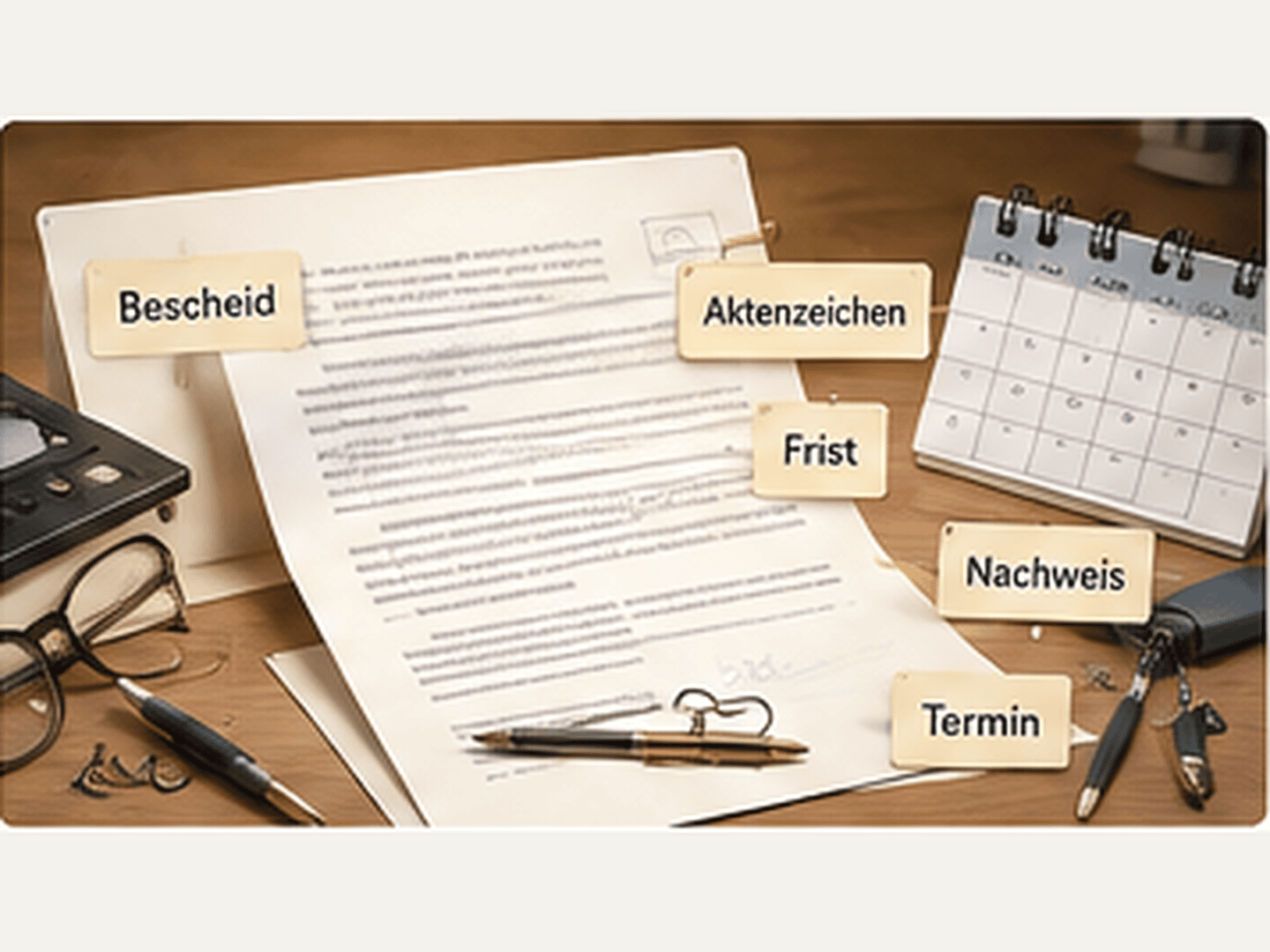
German official letters can look intimidating at first. They often contain long words, reference numbers and formal sentences that are very different from everyday German. But you do not need to understand every word before you can find the most important information.
This guide shows you how to orient yourself in a typical official letter, which German terms are worth recognising and how to ask for clarification. It provides general practical and language guidance only. It does not interpret an individual decision or give legal advice.
Start with five questions
When you open a letter from an authority or public office, do not begin by translating every sentence. First look for five things:
- Who sent the letter? Look for the name and contact details of the authority or office.
- What is the letter about? The subject line, often labelled Betreff, can give you the fastest overview.
- Is there an Aktenzeichen? This is the reference number for the case or correspondence.
- Is anything being requested? Look for words such as Unterlagen, Nachweis, einreichen, mitteilen or Rückmeldung.
- Is there a date or deadline? Look for Frist, bis zum or a clearly stated date.
This first scan can tell you whether the letter is simply informational or whether you need to look more closely and respond.
1. Find the sender and subject
The sender is usually visible near the top of the letter or in the letterhead. The Betreff tells you what the letter concerns.
A fictional example might look like this:
Betreff: Nachweis Ihrer Unterlagen
Aktenzeichen: DA-24-1087
You do not need to know every word in the rest of the letter to understand that the topic concerns documents and that the reference number is important.
2. Keep the Aktenzeichen
Aktenzeichen means reference number or file number. If a letter includes one, keep it nearby when you contact the office. It helps the person you speak to identify the correct case or correspondence.
A useful sentence is:
Mein Aktenzeichen lautet DA-24-1087.
My reference number is DA-24-1087.
Do not confuse the Aktenzeichen with your personal ID number, tax number or other unrelated number. Use the exact reference shown on that specific letter.
3. Look for what the office is asking for
Formal letters often use nouns where everyday speech would use a full sentence. A few words can therefore tell you a lot.
Unterlagen means documents or paperwork.
Nachweis means proof or supporting evidence.
Antrag means application.
Rückmeldung means response or feedback.
If you see a sentence such as:
Bitte reichen Sie die fehlenden Unterlagen ein.
it means that missing documents are being requested.
If you are not sure which documents are meant, ask instead of guessing:
Könnten Sie mir bitte erklären, welche Unterlagen noch fehlen?
That sentence is useful far beyond this one situation.
4. Check dates carefully
A letter may contain several dates: the date the letter was issued, an appointment date and a deadline. They are not the same thing.
The word Frist means deadline or time limit. You may also see phrases such as bis zum 30. September.
If the meaning of a date is unclear, ask directly:
Bis wann muss ich die Unterlagen einreichen?
This guide does not tell you whether a particular deadline is legally binding or what happens if it is missed. For questions about an individual administrative procedure, contact the responsible authority or qualified professional.
5. Find the right contact
A letter may include the name of a contact person, a telephone number, an email address or general office details. When contacting the authority, mention the subject and Aktenzeichen before giving a long explanation.
A simple opening is:
Guten Tag. Ich habe ein Schreiben von Ihnen erhalten. Mein Aktenzeichen lautet …
Then say what you need:
Ich habe eine Frage zu den angeforderten Unterlagen.
or
Könnten Sie mir bitte erklären, was ich noch einreichen soll?
For general questions about public administration in Germany, the nationwide Behördennummer 115 can provide information about administrative services and help identify the relevant authority. It does not provide individual legal advice about personal cases.
Mini dialogue: asking about a letter
Caller: Guten Tag. Ich habe ein Schreiben von Ihnen erhalten.
Office: Haben Sie ein Aktenzeichen?
Caller: Ja. Mein Aktenzeichen lautet DA-24-1087. Ich habe eine Frage zu den Unterlagen.
Office: Welche Frage haben Sie?
Caller: Könnten Sie mir bitte erklären, welche Unterlagen noch fehlen und bis wann ich sie einreichen muss?
Office: Ja, ich schaue mir den Vorgang an.
A simple reading strategy
If a letter feels difficult, use this order:
sender → subject → Aktenzeichen → requested action → deadline → contact
Only then read the full text closely. This stops one unfamiliar word from blocking your understanding of the whole letter.
If the letter contains a decision with important consequences for you, or if you are unsure about your rights or obligations, obtain advice from the responsible authority or an appropriately qualified adviser rather than relying on a general language guide.
German you actually need
Useful phrases
Practice
Practice
Suggested level: A2–B1
Exercise 1: Match the word
Match the German word with the correct meaning.
- Aktenzeichen
- Frist
- Nachweis
- Unterlagen
- zuständig
- Betreff
a. documents
b. subject
c. reference number
d. responsible
e. deadline
f. proof / supporting document
Exercise 2: Choose the best phrase
- You want to know which documents are still missing.
A. Wann ist Feierabend?
B. Welche Unterlagen fehlen noch?
C. Ist das rezeptfrei?
- You want to identify your case.
A. Mein Aktenzeichen lautet …
B. Ich möchte einen Termin absagen.
C. Wo ist mein Arbeitsplatz?
- You want to know the deadline.
A. Wer ist dafür zuständig?
B. Bis wann muss ich die Unterlagen einreichen?
C. Passt Ihnen Dienstag?
Exercise 3: Fill in the blanks
Use: Bescheid · Aktenzeichen · Frist · Nachweis · zuständig
- Mein __________ lautet DA-24-1087.
- Welche __________ muss ich beachten?
- Ich habe einen __________ erhalten.
- Welchen __________ brauchen Sie noch?
- Wer ist dafür __________?
Exercise 4: Put the dialogue in order
A. Ja. Mein Aktenzeichen lautet DA-24-1087.
B. Guten Tag. Ich habe ein Schreiben von Ihnen erhalten.
C. Welche Frage haben Sie?
D. Haben Sie ein Aktenzeichen?
E. Welche Unterlagen fehlen noch?
Exercise 5: Your turn
Write two sentences you could use when you do not understand an official letter. Use at least one of these words: Aktenzeichen, Unterlagen, Frist, zuständig.
Show answers
Exercise 1
1–c, 2–e, 3–f, 4–a, 5–d, 6–b
Exercise 2
1–B, 2–A, 3–B
Exercise 3
- Aktenzeichen
- Frist
- Bescheid
- Nachweis
- zuständig
Exercise 4
B → D → A → C → E
Exercise 5
Open production task. Accept grammatically understandable answers that fit the communicative purpose.
Frequently asked questions
What is an Aktenzeichen?
An Aktenzeichen is a reference or file number used to identify a specific case or piece of correspondence. If it appears on your letter, quote it when contacting the sender.
What does Bescheid mean?
Bescheid is a common word for an official notice or administrative decision. The exact legal meaning depends on the document and procedure.
How can I find a deadline in a German letter?
Look for words such as Frist or bis zum and check what each date in the letter refers to.
What should I do if I do not understand which documents are required?
Contact the sender and ask which Unterlagen or Nachweise are still needed. Mention the Aktenzeichen if one is provided.
Can the Behördennummer 115 explain my personal legal situation?
The 115 provides general administrative information and contact guidance, but not individual legal advice about personal cases.
Sources & note
Behördennummer 115: official service portal
https://www.115.de/
General administrative questions, contacts and scope of 115; site states that individual legal advice on personal cases is not provided.
Related guides
Visiting a doctor in GermanyHealthAnmeldung in GermanyFirst Days & PaperworkFinding an apartment in GermanyHousing